





contact@dn.com
+86 135-7488-8887
3814848

Please scan the code using WeChat
A top-level domain (TLD) consisting of just three letters has ignited a controversy that transcends language and culture.
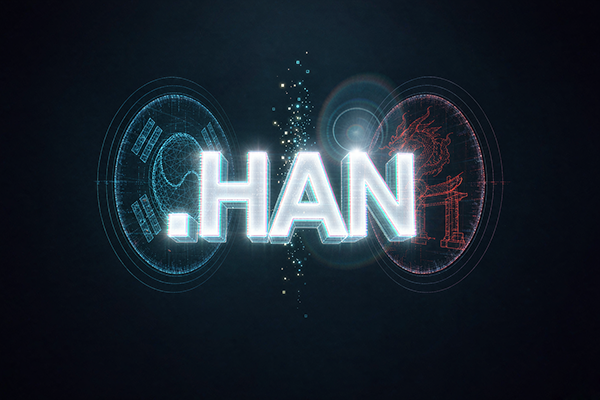
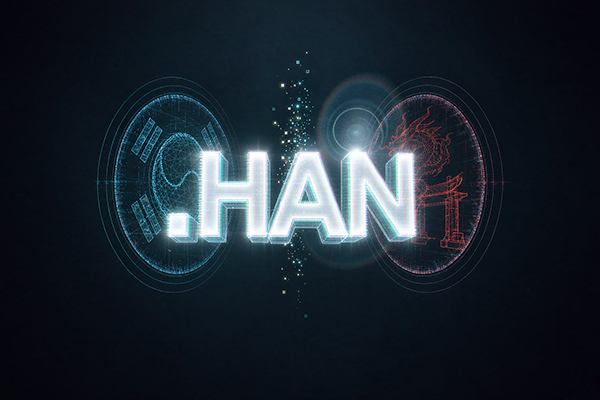
Recently, an application for the new top-level domain ".HAN"—submitted by the South Korean domain service provider Gabia—faced an objection from a Chinese internet organization, which requested a change to the domain's spelling. The two parties hold differing interpretations of the cultural significance behind the string "Han," making this application a notable case to watch in the 2026 round of new gTLD applications.
I. The .HAN Controversy: Same Spelling, Different Cultural Interpretations
According to a report by South Korea’s Yonhap News Agency on November 23, the Internet Society of China (ISC) sent a letter to Gabia on October 20. The ISC argued that since "Han" is identical to the Pinyin romanization of the Chinese character "漢" (associated with the Han ethnic group, Chinese characters, and Chinese history and culture), it could cause confusion among internet users. Consequently, the ISC requested that Gabia change the spelling of .HAN.
Additionally, Wang Wei, an expert from the China Internet Network Information Center (CNNIC), sent a similar letter on October 26.
Gabia has explicitly refused this request.
Gabia maintains that "Han" is also the English romanization for the Korean term "韓" (Han), which is closely tied to Korean identity and culture. The mere fact that different cultures use the same Latin-alphabet spelling is not sufficient grounds to demand a change to a domain name.
From a linguistic perspective, this controversy is easy to understand: the same combination of Latin letters can carry different meanings across different languages and cultures.
II. The Controversy Enters the ICANN Evaluation Phase; Final Outcome Yet to Be Determined
On November 17, 2026, ICANN officially confirmed the list of strings for the new round of generic top-level domain (gTLD) applications. Gabia’s application for .HAN—retaining its original spelling—has moved forward into the subsequent evaluation process.
Currently, Gabia is the sole applicant for .HAN, meaning there is no competition from other parties seeking the same string.
However, this does not mean the application has received final approval.
According to the timeline published by ICANN, the period for community comments and objections regarding the 2026 round of new gTLD applications will run until March 16, 2027.
During this window, eligible organizations or individuals may file formal objections through established procedures, and such disputes could potentially be referred to specialized dispute-resolution bodies for adjudication.
As of November 24, there is no public information confirming that any formal objections to .HAN have been filed. Whether the application will ultimately pass the evaluation and be granted authorization remains to be determined by the subsequent process. III. Competition for New gTLDs: Beyond Just Strings and Application Fees
What truly warrants the domain industry’s attention in this case is the shift it reveals in the landscape for new gTLD applications.
For the upcoming round of applications in 2026, ICANN initially received 1,615 submissions; following subsequent adjustments, 1,610 applications are currently moving forward.
This large volume of applications signals a future where the internet’s top-level domain space will feature a more diverse array of names and brand options.
However, applying for a new top-level domain involves far more than simply selecting an ideal string and preparing the necessary application fees.
Factors such as whether a name involves geographical identifiers, linguistic or cultural elements, community interests, or trademark rights—as well as the potential for public interest controversies—can all become critical considerations during the subsequent evaluation process.
In today’s globalized internet environment, a single string may carry different meanings across various languages. Applicants must not only weigh the commercial value of a name but also proactively assess its suitability across different countries and cultural contexts.
IV. The Global Value of Domain Names Entails Higher Standards for Branding and Governance
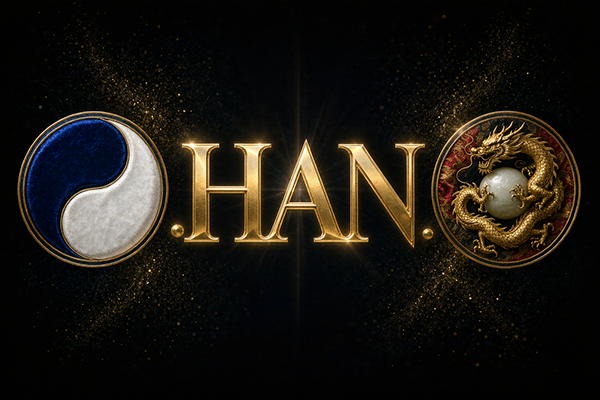
The case of ".HAN" demonstrates that top-level domains (TLDs) have long transcended their role as mere technical identifiers on the internet.
A short string of characters can represent a corporate brand, while simultaneously embodying national, regional, linguistic, or cultural identities.
As the application process for new generic TLDs (gTLDs) enters the formal evaluation phase, similar disputes over domain names may well arise in the future.
For the domain name industry, this presents both a challenge and a sign of the sector’s ongoing maturation and move toward greater standardization.
The value of a domain name lies not only in its brevity or ease of recall, but in its capacity to establish a clear, credible, and enduring identity within the global internet ecosystem.


 Contact Us