


contact@dn.com
+86 135-7488-8887
3814848

Please scan the code using WeChat
On November 23, global technology and financial markets witnessed a striking turnaround. Nvidia announced the reappointment of Jensen Huang as CEO, a development that swiftly ignited market sentiment.
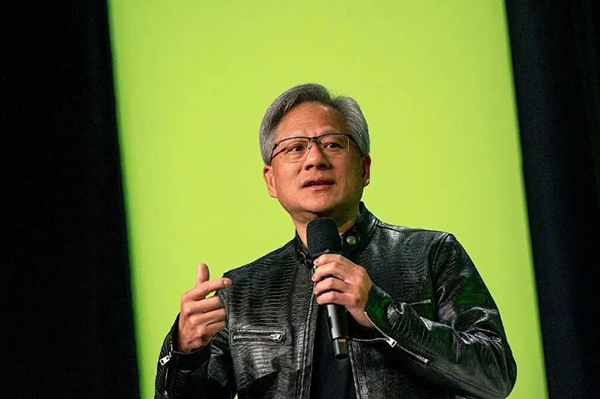
On that day, the three major U.S. stock indices surged in unison. The S&P 500 rose by 4.73%, and the Nasdaq climbed 6.51%—marking one of the largest single-day gains since April 2025.
Nvidia’s stock price jumped approximately 31.5%, Tesla rose 11.46%, Meta gained 6.55%, and Google climbed 6.34%, with the "Magnificent Seven" tech giants showing broad-based strength.
The shift in market sentiment—from the initial anxiety sparked by Jensen Huang’s departure to the robust rebound in the AI sector following his return—underscores Nvidia’s pivotal role in the global AI supply chain and has prompted a fresh look at the future growth potential of the AI industry.
The story of AI is far from over.
Over the past few years—from the explosion of generative AI ignited by ChatGPT and the emergence of Nvidia’s GPUs as the centerpiece of the global race for computing power, to the rapid rise of AI agents, embodied AI, and intelligent robotics—artificial intelligence has evolved from a mere technical innovation into a global industrial competition spanning computing power, software, hardware, capital, and commercial applications.
An increasing number of enterprises are entering the AI arena, with a continuous emergence of new AI products, startups, and business models.
For companies and entrepreneurs looking to join this AI boom, there is one often-overlooked yet increasingly vital element—beyond technology, talent, capital, and market reach:
A domain name that effectively conveys the nature of the business, serving as a digital gateway that is easily recognizable and accessible to users worldwide.
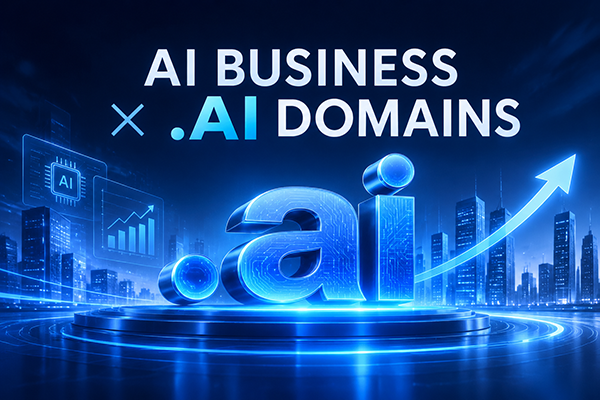
In the AI sector, in particular, the ".ai" domain extension has become the go-to choice, carrying clear, industry-specific recognition.
If computing power is the foundation for the development of the AI industry, then a domain name acts as a crucial calling card for market competition—an indispensable component of any digital strategy.
Looking to join the AI revolution? Start by exploring these premium ".ai" domain names.
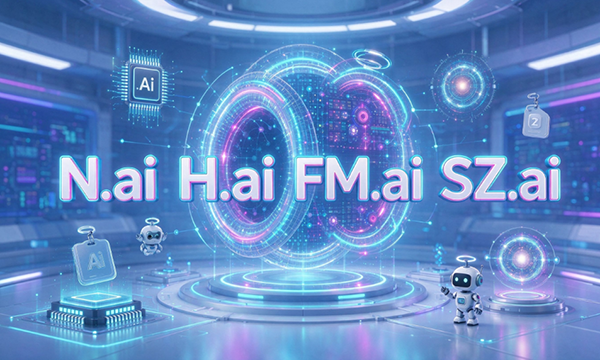
N.ai: The letter "N" can be interpreted as "Neural," "Next," or "Network," making it well-suited for AI platforms, neural network-related ventures, and brands focused on next-generation intelligent technology.
H.ai: Another rare single-letter .ai domain. "H" can stand for "Human," "Hyper" (as in hyper-intelligent), or "Hub," making it ideal for applications in human-computer interaction, AI assistants, and agent-based platforms.
FM.ai: A two-letter combination, "FM" can represent concepts like "Foundation Model" or "Future Machine," making it a strong choice for AI models, smart hardware, and technology platforms.
SZ.ai: A two-letter .ai domain that offers significant branding potential; it is well-suited for intelligent technology, AI software, robotics, and global-facing innovative brands.
While a domain name alone does not guarantee success in the AI sector, companies with a long-term vision can benefit from securing a high-quality, memorable, and distinctive domain early on—creating more room for future brand development.
Competition in the AI industry is already underway. As more companies crowd into the AI space, the scarcity of premium domain names warrants a fresh look.
A promising sector requires great products, and a great brand requires a great domain name.
A high-quality domain name serves as an entry ticket for an AI brand to reach the global stage.



 Contact Us