







contact@dn.com
+86 135-7488-8887
3814848

Please scan the code using WeChat
Recently, a piece of noteworthy news has emerged from the domain name industry:American payment technology company Bolt has sold its core domain name, Bolt.com, and migrated its official website to BoltApp.com.
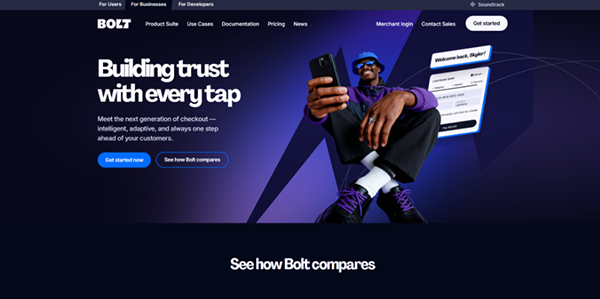
According to industry media reports, the buyer in this transaction is Bolt, a European mobility services company headquartered in Estonia. The specific purchase price has not been disclosed.
The U.S.-based payments company, also named Bolt—known for its fast-checkout and one-click payment services—was once a high-profile fintech firm in Silicon Valley. In 2022, the company reached a valuation of $11 billion, establishing itself as a star player in the fintech sector.
Once a "unicorn," the company is now selling its core domain name, citing financial pressure as a key reason for the sale of Bolt.com.
Why would the buyer—also named Bolt—spend money to acquire the .com domain?
The buyer in this transaction is the well-known European mobility platform, Bolt.
Formerly known as Taxify, the company operates across sectors including ride-hailing, electric scooter and bicycle rentals, car-sharing, and food delivery, with services spanning numerous countries and regions.
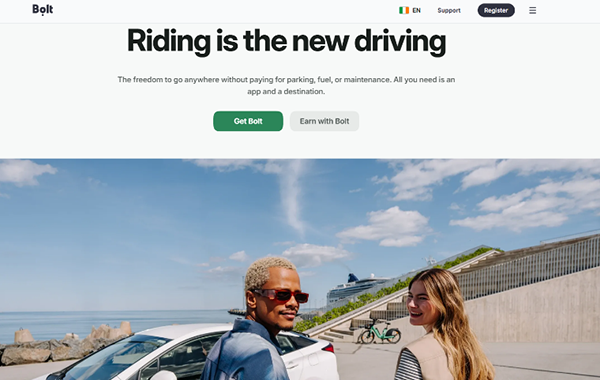
Previously, the European company Bolt primarily used "Bolt.eu" as its official website domain. By acquiring "Bolt.com," the company has secured a global top-level domain that perfectly matches its brand name.
For a company actively expanding into international markets, "Bolt.com" is notably more concise and easier for a global audience to remember. Compared to the ".eu" suffix—which carries a regional connotation—the ".com" extension enjoys much broader recognition in international business communications.
It remains to be seen whether the European Bolt will fully transition to "Bolt.com" and when it might adjust its existing domain infrastructure.
A domain name is not just a gateway to a brand; it is also a digital asset that can be monetized.
This transaction highlights an important point for businesses: beyond helping to build a brand, a domain name can serve as a digital asset that a company can sell or monetize when the need arises.
For the American company Bolt, "Bolt.com" was once a key component of its brand operations. However, when the company faced financial pressure, selling this commercially valuable domain became a viable option to unlock the value of its assets and generate capital.

When companies need to reallocate assets or alleviate cash flow pressures, high-quality domain names may also find their way onto the sales list.
A short, scarce domain name with clear commercial value possesses its own inherent marketability. Companies can hold such assets long-term to support brand building and global business expansion, or sell them at an opportune moment to convert digital assets into liquid capital.
From the perspectives of the buyer and the seller, this transaction presents an intriguing contrast: the American company Bolt monetized its assets by selling a domain name, while the European company Bolt upgraded its brand assets by acquiring one.
In the era of the digital economy, companies can leverage domain names to establish their brands or to unlock the value of their assets.
For businesses that own high-quality domain names, these assets serve a dual purpose: they are both a vital component of the brand and a digital asset with tangible market value.


 Contact Us