






contact@dn.com
+86 135-7488-8887
3814848

Please scan the code using WeChat
In the domain industry, incidents of domain squatting occur frequently, both intentionally and unintentionally. Once a registered domain coincides with a well-known brand in the market, there is a risk of facing a lawsuit and being compelled to relinquish the domain. Recently, a Chinese domain investor, Sun Jie, registered the domain "Wyzes.com" on Alibaba Cloud, which happened to overlap with the name of a U.S. company, Wyze Labs, Inc. This led to allegations of malicious domain squatting, resulting in a legal dispute. Ultimately, the domain was transferred to the plaintiff, Wyze Labs, Inc., for a sum of $21,750.
1. Background of the Incident:
On October 27th, a domain dispute involving the "Wyzes.com" domain was resolved in the International Internet Court. The Chinese registrant lost the case, and the domain was eventually transferred to the plaintiff, Wyze Labs, Inc., for $21,750.
2. Domain Squatting Situation:
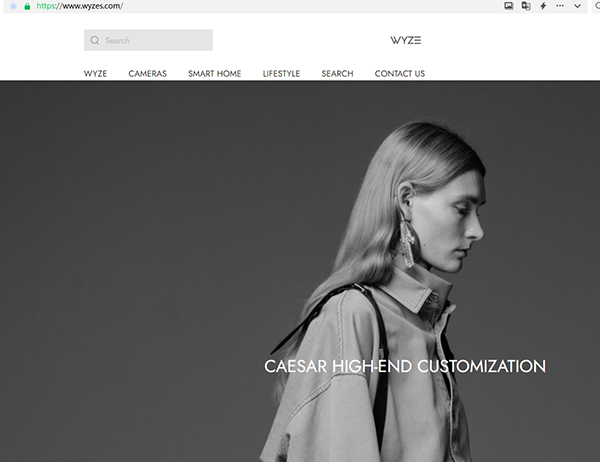
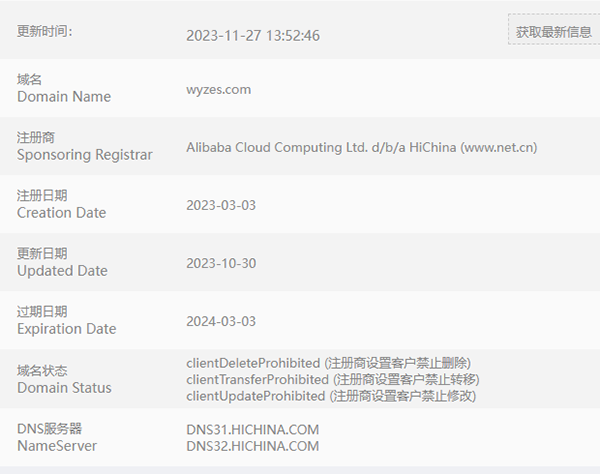
"Wyzes.com" was registered in March 2023, while the company "Wyze" was established in 2017. It was evident that this was a case of domain squatting, where the Chinese registrant utilized the "Wyzes.com" domain to sell counterfeit Wyze Labs products. Wyze Labs is renowned for providing high-quality, user-friendly smart home products, including smart home cameras, light bulbs, and smart plugs, among others. The registrant sought to profit by manufacturing counterfeit products, taking advantage of the popularity of the Wyze Labs brand.
3. UDRP Decision:
Under the Uniform Domain-Name Dispute-Resolution Policy (UDRP), the complainant Wyze Labs, Inc. successfully asserted their legitimate rights to the "Wyzes.com" domain. The decision highlighted that the registrant deliberately attempted to sell counterfeit products, causing confusion among consumers and leading them to believe they were purchasing from an authorized Wyze Labs retailer. The panel members noted that the registrant's website and the products promoted there were misleading.
4. Case Details:
In the ruling, the complainant successfully established three key elements:
1. The domain was similar to trademarks owned by the complainant.
2. The respondent had no legitimate rights or interests in the domain.
3. The domain was registered and used in bad faith, intending to confuse internet users for commercial gain.
The forum panel ultimately decided to transfer the "Wyzes.com" domain to the complainant as a sanction against the malicious domain squatting behavior. This case underscores the importance of protecting intellectual property and brand reputation, particularly in the internet age.


 Contact Us