



contact@dn.com
+86 135-7488-8887
3814848

Please scan the code using WeChat
The global New gTLD (generic Top-Level Domain) program has reached a significant milestone.
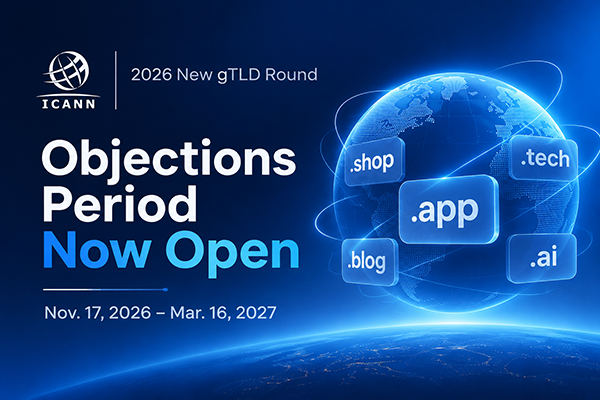
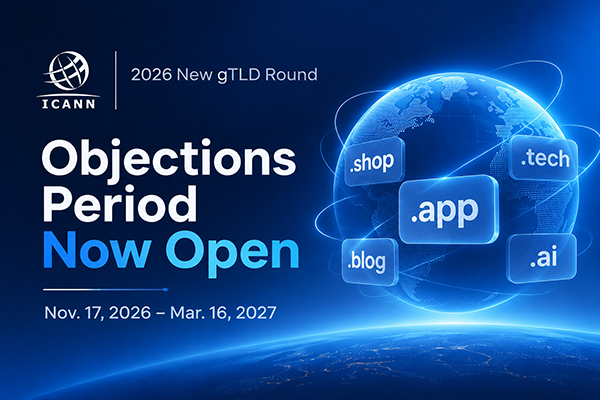
On November 17, 2026, ICANN officially released the final confirmation status for the new round of applications and announced the commencement of the "Community Input and Objections Period." This marks the formal entry of the 2026 New gTLD program into the evaluation and review phase following the confirmation of applications.
According to updated data from ICANN, there are currently 1,606 applications moving forward, involving 226 "contention sets"—groups of applications that compete for the same or similar strings—with 705 individual applications currently in contention. Since "Reveal Day" on October 7, nine applications have been withdrawn. Following adjustments, such as applicants opting for alternative strings, the proportion of applications in contention has decreased from an initial 55% to approximately 44%.
From Application Volume to String Contention: The Review Process Enters a Critical Phase
For new gTLD applicants, submitting an application is merely the first step. The requested strings must subsequently undergo a multi-faceted evaluation, covering areas such as string similarity, name collisions, the identification of geographic names, and reviews related to security and stability.
Concurrently, the public comment and formal objection mechanisms have been launched, remaining open until March 16, 2027. Members of the public and the ICANN community may submit comments on applications through designated channels. Furthermore, eligible parties may file formal objections based on specific grounds, including string confusion, legal rights, limited public interest, or community interests.
It is important to note that public comments and formal objections are distinct processes. Formal objections must be submitted by qualified parties in accordance with established procedures and specified deadlines.
A New Domain Landscape Undergoes Rigorous Scrutiny
This round of new gTLD applications encompasses a diverse range of categories, including brands, communities, geographic names, and internationalized domain names (IDNs). For enterprises, securing a new top-level domain (TLD) offers more than just an internet suffix; it can serve as a dedicated brand gateway, an expansion of a digital identity framework, or a strategic foothold for future business ecosystems.
However, the number of applications does not equate to the number of final approvals. Factors such as string similarity, the legal rights of existing brands, community concerns, and the security and stability of the Domain Name System (DNS) may all influence the trajectory of an application.
As the evaluation and objection processes unfold, the industry will increasingly focus on which applications successfully pass, and which strings require the resolution of contention or other disputes.
The latest expansion of new gTLDs has entered a substantive phase. For registries, registrars, brand owners, and domain investors, this represents not merely an increase in the number of available domain suffixes, but a significant window into the future evolution of digital branding and the domain name market.


 Contact Us