







contact@dn.com
+86 135-7488-8887
3814848

Please scan the code using WeChat
This was also due to technological limitations at the time because of network transmission restrictions. To fit all root server data within a 512-byte UDP packet, there had to be a constraint on the number of root servers, limiting them to 13 in total. Each server was named using a single letter from the alphabet, which is why the root servers are named from A to M.
Root servers primarily manage the main directory of the internet. There are only 13 of them worldwide, with one primary root server located in the United States. The remaining 12 are secondary root servers, with nine in the United States, two in Europe (in the United Kingdom and Sweden), and one in Asia (in Japan).
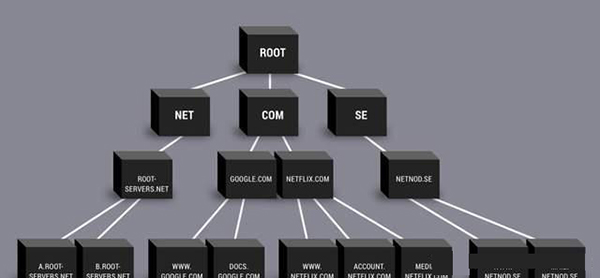
All root servers are under the unified management of ICANN (Internet Corporation for Assigned Names and Numbers), authorized by the U.S. government. ICANN is responsible for the management of global internet domain root servers, domain systems, IP addresses, and more. These 13 root servers can direct internet communications, controlling web browsers like Firefox or Internet Explorer and email programs. Due to the presence of approximately 260 approved internet suffixes (e.g., .com, .xyz, .net, .top) and certain country codes (e.g., .fr for France, .no for Norway) within the root servers, the U.S. government holds significant authority over their management. Root domain servers are considered essential infrastructure for the architecture of the internet. In foreign contexts, many computer scientists refer to root domain servers as "truth," highlighting their importance. In other words, attacking root domain servers is perhaps the most powerful, direct, and potentially devastating method of attacking the entire internet.

However, this was in the era of IPv4. In a more contemporary context and in alignment with the existing IPv4 root server architecture, the "Snowman Project" was initiated by the Next Generation Internet National Engineering Center. This project, completed in 2016 across 16 countries worldwide, including the United States, Japan, India, Russia, Germany, and France, involved the deployment of 25 IPv6 (Internet Protocol version 6) root servers. This development formed a new framework, combining the original 13 root domain servers with 25 IPv6 root domain servers.


 Contact Us