




contact@dn.com
+86 135-7488-8887
3814848

Please scan the code using WeChat
Recently, the 27th review meeting of the Science and Technology Innovation Board listing committee garnered significant attention due to the approval of the initial public offering application by Kingsoft Office.
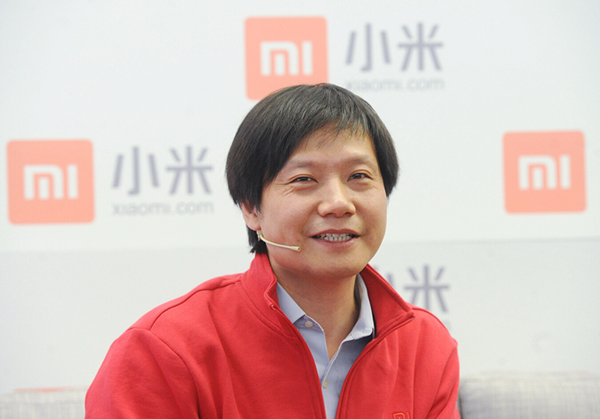
The spotlight on Kingsoft Office's approval largely stems from its controlling shareholder, Lei Jun. Lei Jun can be considered one of the early beneficiaries of the internet boom in China. At the age of 22, he became a millionaire with software he coded himself. He's rightfully considered a father figure of the Chinese internet.
Lei Jun indirectly holds 11.99% of Kingsoft Office's shares. With the company's successful listing, Lei Jun's wealth is expected to increase by 1.122 billion yuan based on the market value of 9.356 billion yuan. This will mark his third listed company, following Kingsoft Corporation and Xiaomi Group on the Hong Kong Stock Exchange.

While Lei Jun's success is unique, his journey sheds light on the trajectory of the entire internet industry.
After university, Lei Jun ventured to Beijing and joined Kingsoft Software (softking.com). His exceptional talents led him to the position of General Manager. Through his leadership, Kingsoft embarked on the path to IPO. Lei Jun, having achieved success after 16 years of hard work, shifted to angel investing. Figures like Jack Ma and Pony Ma sought financing from him.
Lei Jun invested in well-known cases across various fields: LAKALA, UCWeb, VANCL, YY, LeTao, Duowan, Duokan, among others. Notably, VANCL gained immense popularity, while YY went public in the U.S., currently valued at over $4.48 billion.
Investment deepened Lei Jun's understanding of the internet. It was during this time he contemplated entrepreneurship. He strongly believed that a world-class company required a great domain name.
When I invest in companies, I always tirelessly push them to choose the best name. What's challenging in today's internet? Can this name be trademarked? Can the domain name be acquired? Can you get the Xiaomi pinyin domain? If not, I won't use it. To build a world-class company, you can't imagine calling it "xiaomi.com" and having it associated with just any company. So, when you start, you need a good name, and it must have a domain. So, I tell them that a good name has a trademark, a domain, a good meaning, and is catchy.
— Lei Jun
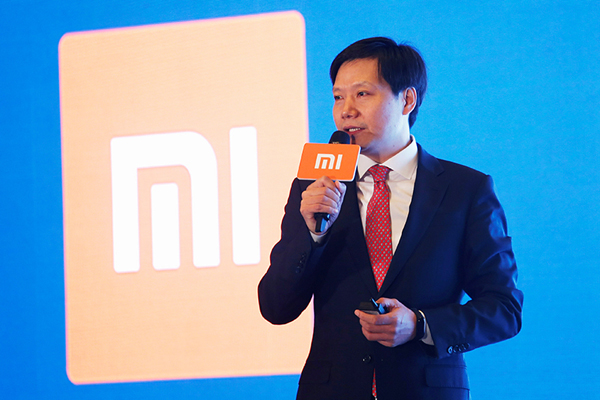
In his midlife, to make Xiaomi a global brand, he spent $3.6 million to acquire one of the "most expensive domain names in Chinese internet history," Mi.com. It not only corresponds to the Xiaomi logo "Mi," but is also shorter and more user-friendly. Lei Jun stated, "Foreigners won't read or remember 'xiaomi.'" Indeed, Mi.com is better suited for Xiaomi's expansion into foreign markets.
A few years ago, Lei Jun spent $10 million to acquire the domain name maiche.com, which he gifted to Mu Cang Technology and developed into a car buying platform, reflecting his foray into the automotive e-commerce industry.
Xiaomi's portfolio of domain names includes mi.com, xiaomi.com, miui.com, zhimi.com, miliao.com, heihei.com, shunwei.com, leijun.com, shouji.cn, and many more. This extensive collection enables Lei Jun to strategize effectively and gain more traffic, facilitating brand promotion.
The impending listing of Kingsoft Office also highlights its meticulous domain protection efforts, owning not only WPS.com/.cn/.com.cn but also safeguarding related domains like wpsoffice.com/.cn/.net, wpscloud.com/.cn/.com.cn/.net. This prevents rivals from registering domains and safeguards against malicious competition.
While some industry insiders may think domains are less relevant in the era of apps, apps themselves are transitioning, and the fundamental role of domains, which serve as internet addresses, will always be vital. A good, memorable domain name can create significant intangible value for a company.


 Contact Us