







contact@dn.com
+86 135-7488-8887
3814848

Please scan the code using WeChat
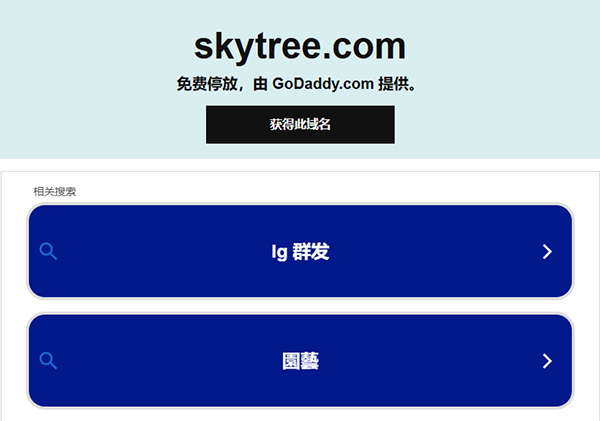
The World Intellectual Property Organization (WIPO) recently ruled on the domain name dispute between Dutch company Skytree BV (complainant) and US entity Whiskytree, Inc. (respondent), finding that the complainant filed the Uniform Domain Name Dispute Resolution Policy (UDRP) procedure in bad faith, constituting reverse domain name hijacking (RDNH), and the disputed domain name skytree.com continues to belong to the respondent.
Focus of dispute: Domain name registered in 1998 vs. trademark rights in 2014
The respondent registered skytree.com in December 1998, while the complainant only began to use the SKYTREE trademark to provide carbon capture technology services in 2014. Although the complainant filed the UDRP procedure after unsuccessfully trying to acquire the domain name for $14,000 through GoDaddy brokerage services, accusing the respondent of holding the domain name in bad faith, the panel pointed out that according to UDRP policy precedent, if the domain name registration time is earlier than the trademark right (16 years in this case), there is no possibility of bad faith registration.
Panel: Complainant abused the procedure
In its ruling, the panel listed multiple violations by the complainant:
1. Ignoring policy precedents: The complaint clearly acknowledged that the respondent registered the trademark long before the trademark right, but still claimed bad faith registration, violating the principles established in Section 3.8.1 of WIPO Overview 3.0;
2. Fabricating legal basis: Equating the lack of active use of the domain name with "deterioration" as bad faith, attempting to replace the respondent's bad faith evidence with the complainant's needs;
3. Instrumentalization of procedures: Acknowledging that the complaint was filed because the domain name owner could not be contacted through the brokerage service, using the UDRP as a tool to reveal the identity or pressure the purchase;
4. Lack of good faith negotiation: After the respondent did not respond to the broker's request, the UDRP was directly initiated instead of resolving the dispute through other legal channels.

Industry warning: UDRP is not a shortcut to domain name acquisition
This case once again highlights the core principle of the UDRP procedure - protecting legitimate prior domain name rights. WIPO expert Adam Taylor stressed: "The complainant misunderstood the UDRP as a negotiation tool to obtain other people's domain names, and this behavior seriously damaged the credibility of the dispute resolution mechanism."
Currently, skytree.com is still held by the respondent, and its legitimate rights and interests as a visual effects company are protected. The case shows that when trademark holders assert their rights through UDRP, they must strictly follow the constituent elements of "bad faith registration", otherwise they may face sanctions for procedural abuse.


 Contact Us