





contact@dn.com
+86 135-7488-8887
3814848

Please scan the code using WeChat
SpaceX and Tesla are advancing discussions regarding a potential merger. According to a Bloomberg report on November 12, the two companies are currently negotiating the terms of the deal and the governance structure of the combined entity. An announcement could come as early as December, though it might also be delayed until early 2027. At this stage, these are merely reported developments rather than a finalized agreement. Should the deal come to fruition, its implications would likely extend well beyond corporate valuation and organizational structure.
From the perspective of the domain name industry, one notable question arises: when disparate business operations are consolidated under a single corporate entity, how will the existing digital brand gateways—the domain names—be managed or reorganized?
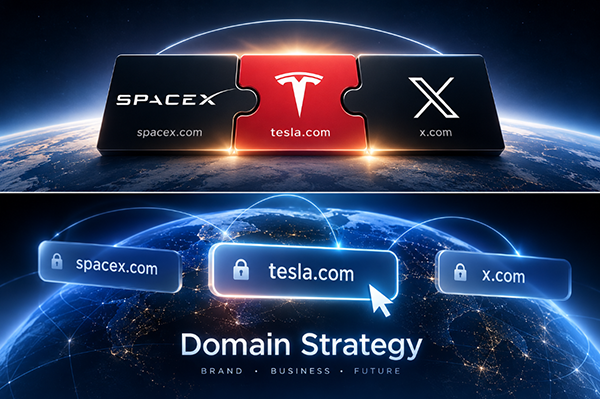
Three Brands, Three Digital Gateways
Currently, x.com, tesla.com, and spacex.com each serve as the digital gateway for distinct brands and business ecosystems.
X functions as a social platform and a gateway to a "super-app"; Tesla focuses on the automotive, energy, and consumer services markets; and SpaceX represents the brand for aerospace, launch services, and Starlink.
Even if the corporate structure were to evolve in the future, it would not necessarily require the unification of these brands.
On the contrary, maintaining separate domain names may be more advantageous for preserving established user perception, brand equity, and business continuity.
Domain names are more than just website addresses—they are corporate digital assets.
SpaceX previously completed the acquisition of xAI, subsequently rebranding its AI operations as "SpaceXAI." This shift illustrates that adjustments to corporate organizational structure are often accompanied by a strategic realignment of brand names and digital identities.
Meanwhile, the reported $174,000 sale of the domain name SpaceXSI.com highlights the clear link between evolving brand identities and the market for domain names.
When a company undergoes a brand upgrade, it must consider not only a new name but also the corresponding domain names, social media presence, and digital access points.
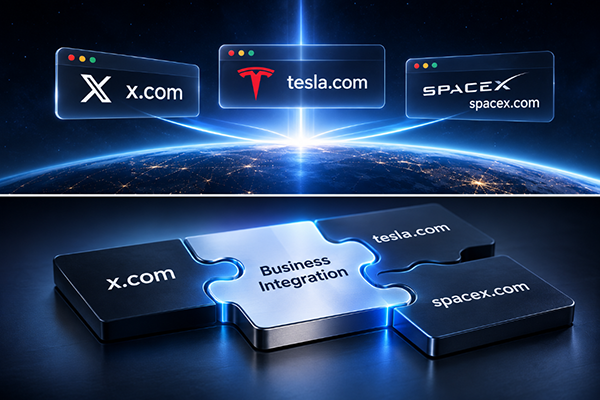
Corporate consolidation can also create new market opportunities for domain names.
Brand realignments within large enterprises often give rise to a range of issues regarding the management of digital assets.
Which domain names should be retained? Which ones require protection? Which business units necessitate a distinct brand gateway? Such decisions can shape a company’s future domain name strategy.
For domain investors and industry participants, this is a trend worth monitoring over the long term.
As sectors like AI, automotive, aerospace, and digital services increasingly converge, the role of a domain name is evolving—extending well beyond a simple gateway to a website, and becoming an integral component of corporate brand management and long-term digital asset strategy.
At DN.com, we remain focused on the tangible value that high-quality domain names bring to corporate brand building.
A strong domain name not only serves a company’s current business operations but can also become a vital digital asset for its future growth.


 Contact Us