




contact@dn.com
+86 135-7488-8887
3814848

Please scan the code using WeChat
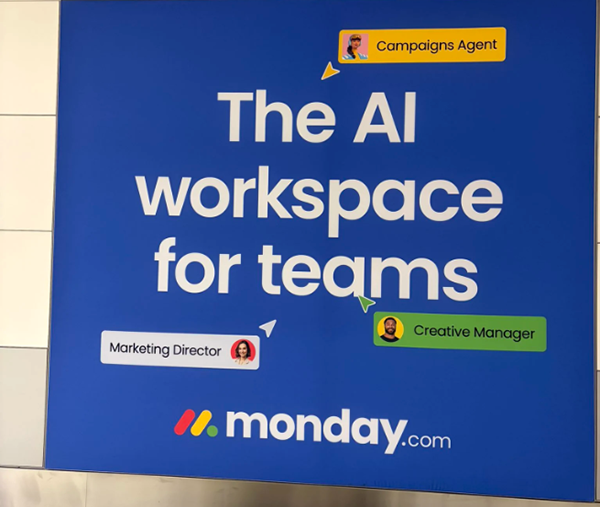
An airport advertisement has brought a brand story—one well worth the attention of the domain industry—back into the spotlight.
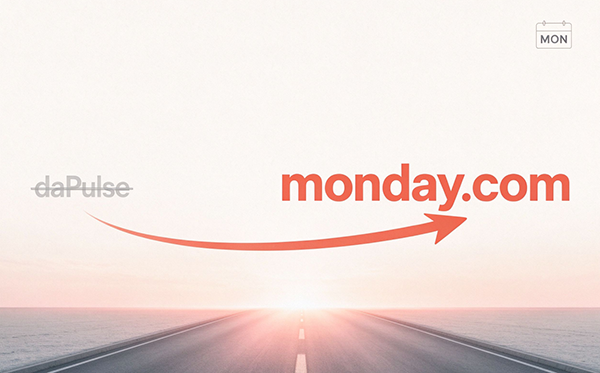
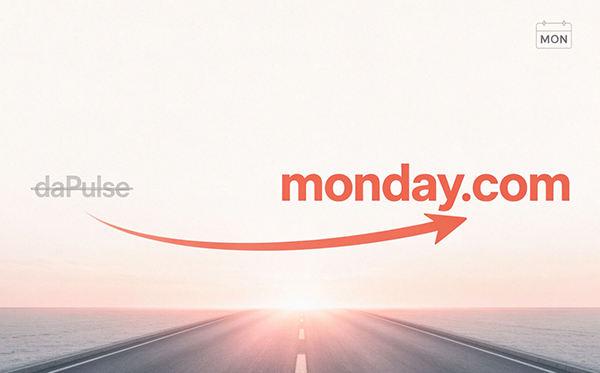
The advertisement features monday.com promoting its "AI Workspace" product. Yet, few may realize that this now-global tech company originally operated under the name "daPulse." In 2017, as the business continued to grow, daPulse officially rebranded as monday.com.
Why the name change?
At the time, the company had already established a solid user base and commercial foundation, but its original name could no longer encompass the company’s broader vision for growth.
The goal was to find a brand name that was easier to spell, pronounce, and remember—one that wouldn’t be constrained by the functionality of any single product.
Ultimately, they settled on a simple English word: "Monday."
For users worldwide, "Monday" is naturally associated with work, teams, and daily collaboration. It isn’t tied exclusively to project management or any specific software feature; instead, it leaves room for a much wider range of business possibilities.
According to the company’s 2017 announcement regarding the name change, monday.com already had over 18,000 paying teams across more than 140 countries and regions, with approximately $34.1 million in total funding.
This means the brand evolution took place only after a strong commercial foundation had been established—it was not merely a simple name change by an unproven startup.
For a company, a brand name is more than just an external label; it is a business asset that must align with future market expansion, product development, and global strategy.
This was not just a rebranding; it was a shift from simple product naming to a long-term brand strategy.
From team collaboration to an AI Workspace: A consistent brand identity
In recent years, monday.com has continued to expand its operations.
Evolving from an initial tool for managing team work into a "Work OS," and now into an "AI Workspace" and "AI Agent" platform, the company has transitioned from traditional collaboration software toward an AI-powered work platform.
As its product features have grown and its business scope has expanded, monday.com has never needed to redefine its brand to keep pace with these changes.
This perfectly illustrates the value of that earlier brand evolution.
If a name is too closely tethered to a specific function, it can create limitations in brand positioning whenever a company enters new markets or develops new product lines.
A universal English word like "Monday," however, provides the company with ample room for future growth.
Why is a high-quality domain name worth a long-term investment?
There are many such examples within the domain market that follow a similar brand logic.
Chat.com was sold for $15.5 million, Connect.com for $10 million, and Rocket.com for $14 million.
Although these domain names correspond to different industries and business scenarios, they share a common trait: they do more than just convey a specific meaning—they function as brands with distinct, recognizable identities.
As AI technology continues to evolve, product formats and business models can shift rapidly. A company offering AI-powered office tools today might, in the future, grow into a comprehensive intelligent work platform.
Therefore, the value of a domain name should not be judged solely by how well it describes a company’s current product, but rather by its capacity to adapt to the company’s future development.
For a business, a strong domain name serves as a brand asset; for domain investors, high-quality, widely recognized terms—those that are easy to communicate and offer room for commercial expansion—are well worth long-term attention.
A great domain name does more than tell users what a company does today; it empowers the company to define what it might become in the future.
Perhaps this is the most thought-provoking lesson the domain industry can draw from the evolution of monday.com—from its origins as "daPulse" to its emergence as a global brand.


 Contact Us