





contact@dn.com
+86 135-7488-8887
3814848

Please scan the code using WeChat
Recently, artificial intelligence company HappyRobot completed a $150 million Series C funding round, bringing the company's overall valuation to $1.2 billion and officially launching a new round of expansion.
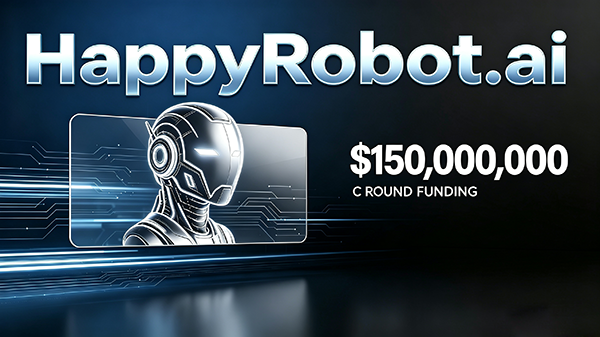
This company has a very interesting name.
While HappyRobot doesn't manufacture physical robots, it focuses on using AI-powered intelligent agents to help businesses automate tasks in areas such as logistics, supply chain, and customer communication.
Its domain name choice—HappyRobot.ai—perfectly reflects its positioning.
The word "Robot" itself is a keyword with strong industry relevance.
When users see "Robot," they naturally associate it with robotics, automation, artificial intelligence, and future technology.
This is why there have been more and more startups centered around robots in recent years.
So, the question is:
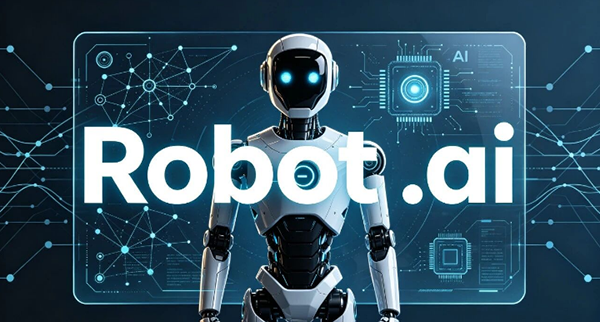
If a company today used Robot.ai to build an AI robot project, what kind of future development potential would it have?
Of course, no one can predict a company's success.
What ultimately determines a company's value is always technology, team, product, and market demand.
However, from a branding perspective, a domain name that highly matches industry keywords can indeed provide a stronger starting point for a project.
Take HappyRobot, for example.
Looking at the name alone, "HappyRobot" is a very clear brand message: making robots smarter and more user-friendly.
Robot.ai, on the other hand, is even more direct; it represents a core keyword in the entire robotics and artificial intelligence field.
In the AI era, industry keywords like these are becoming increasingly scarce.
Over the past decade or so, many internet giants have proven a pattern:
Simple, precise brand names with industry recognition often have stronger dissemination capabilities.
Google represents search, Amazon represents e-commerce, and Tesla represents new energy vehicles.
And the future AI era will undoubtedly give rise to super brands in the robotics field.
So, is it possible for Robot.ai to become such a brand entry point?
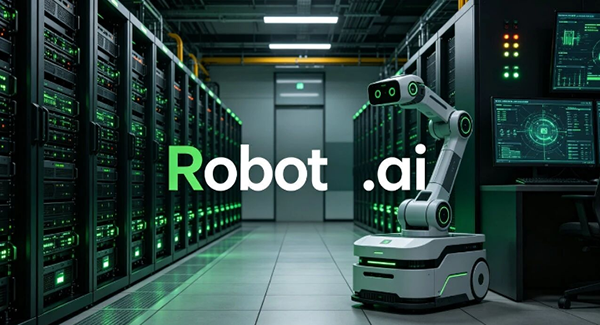
This is a question worth discussing.
If, in the future, a company builds a robot operating system, an AI robot platform, or becomes a crucial gateway connecting the robot ecosystem based on Robot.ai, the brand potential represented by this domain name may be redefined.
After all, robots are becoming a significant direction for AI to enter the real world.
From industrial robots to humanoid robots, and then to AI intelligent agents and automation systems, more and more capital is entering this field.
HappyRobot's $1.2 billion valuation also illustrates the market's increasingly high expectations for the AI automation sector.
Of course, a domain name is not the deciding factor for a company's success.
However, a good brand entry point can help a company establish brand awareness more quickly and allow users to understand the company's direction immediately.
So the question arises:
If a leading global robotics AI company emerges in the future, will it choose a simple and direct brand name?
If this brand is called Robot.ai, will it become a super gateway to the robot era?
Perhaps the market will provide the answer in the next few years.


 Contact Us