




contact@dn.com
+86 135-7488-8887
3814848

Please scan the code using WeChat
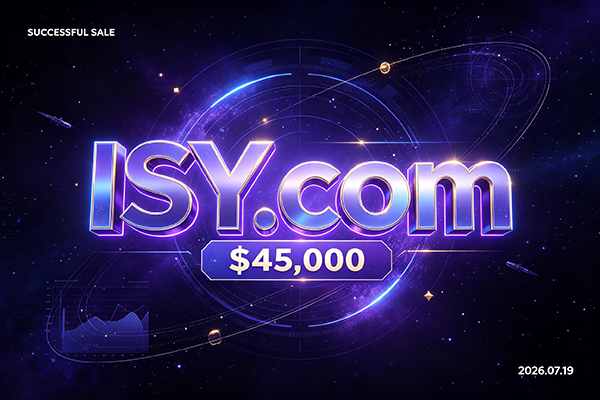
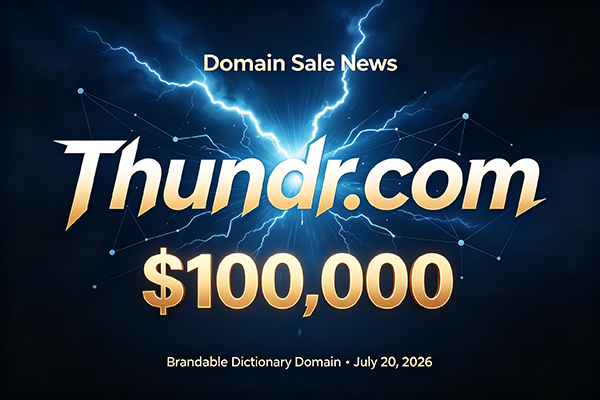
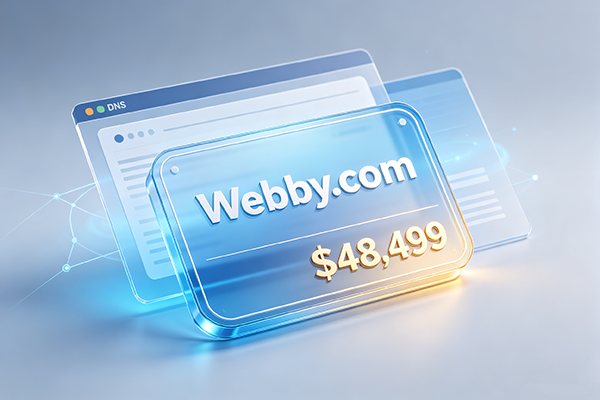
Many people find it unbelievable when they first see news about domain name transactions.
Why would a domain name be worth millions, or even tens of millions of dollars?
In 2019, Voice.com sold for $30 million, breaking the record for publicly traded domain names at the time.
Even earlier, Facebook acquired fb.com for $8.5 million, Business.com for $7.5 million, and AI.com set a record with a $70 million transaction.
If they were simply buying a website address, these people would seem crazy.
But if you look at it from another perspective, they are not buying the domain name itself, but rather the commercial resources it represents.

First, they're buying user trust. In the internet age, a user's first impression of a brand often comes from its domain name.
Imagine: Insurance.com and InsuranceOnline123.com side-by-side, which would you trust more?
The answer is obvious.
A top-level domain naturally possesses a sense of authority, legitimacy, and brand recognition. For industries like finance, insurance, healthcare, and AI, trust often determines conversion rates.
Companies willing to spend millions of dollars on domain names are essentially buying a user's first impression. Once that first impression is established, subsequent customer acquisition costs drop significantly.
Second, they're buying a brand monopoly. In the real world, why are prime location shops expensive? Because space is limited.
The same applies to premium domain names in the internet world. For example, there's only one Voice.com in the world.
And only one Insurance.com in the world.
When a company owns such a domain, it effectively gains supreme ownership of the industry's keywords, making it impossible for competitors to replicate or for newcomers to replace.
This scarcity inherently gives it monopolistic value. Just as luxury brands are willing to spend huge sums to buy prime advertising space in prime commercial areas, top companies are willing to buy the most central locations on the internet.
Third, they are buying marketing costs for the next ten years. Many startups think spending millions of dollars on a domain name is expensive, but if you look at the long term, you'll find it's a completely different story.
A medium to large-sized enterprise often has an annual brand promotion budget of millions or even tens of millions of dollars.
If a top-level domain can improve brand recall, reduce advertising waste, and increase conversion rates, then the cumulative value created over ten years is likely to far exceed the purchase cost.
Block.one, the buyer of Voice.com, already owned the Voice brand, but still spent $30 million to acquire Voice.com. The reason is simple—they didn't want their global brand to be built on Voice.io in the long run.
For a brand targeting the global market, a domain name is infrastructure, not a cost.
Fourth, they are buying a traffic gateway. Many top-level domains inherently possess natural traffic, such as Hotels.com, Insurance.com, and Business.com.
Users don't even need to search; simply entering keywords can lead to a website. Before the advent of search engines, this value was immense.
Even today, a .com domain name with an industry keyword still boasts a strong brand exposure advantage.
In other words, high-priced domain names are not only brand assets but also traffic assets.
Fifth, they are buying the recognition of the capital market.
When many investors look at a company, the first thing they see is the brand. One of the most important digital assets behind a brand is its domain name.
Why are more and more unicorns upgrading their domain names? Because the capital market is beginning to realize that while brands can be reshaped and products can be iterated, truly top-tier digital entry points are becoming increasingly rare.
As of 2026, there have been nearly 100 publicly recorded domain name transactions exceeding $1 million, with a total transaction value exceeding $500 million—and this is only the publicly disclosed data.
This shows that capital has come to regard high-quality domain names as a special asset.
The true value of a domain name is not today.
Many people always see domain names as a cost, but in fact, top companies have long regarded them as assets.
Buying servers is an expense, buying advertising is an expense, hiring employees is an expense, but buying a top-level domain name is more like buying a piece of internet land.
When advertising stops, traffic disappears; when employees leave, skills are lost; but a high-quality domain name continues to generate value as long as the company exists.
Therefore, when companies spend millions or tens of millions of dollars to buy domain names, they are not just buying a website address.
They are buying trust, brand, traffic, monopoly power, and growth potential for the next decade.
As more and more companies begin to vie for entry points into new sectors such as AI, robotics, and digital assets, what is truly scarce is never capital, but rather those top-level domain names that cannot be replicated or reproduced.


 Contact Us