

contact@dn.com
+86 135-7488-8887
3814848

Please scan the code using WeChat
While everyone is discussing AI, capital is already moving to stake a claim in the next trillion-dollar sector.
Recently, the Spanish robotics startup Theker announced the completion of an $85 million Series A funding round—marking the largest Series A financing in the history of the European robotics industry.
For a robotics company that has not been in business long, a funding round of this magnitude speaks volumes about market confidence in the future of the robotics industry.
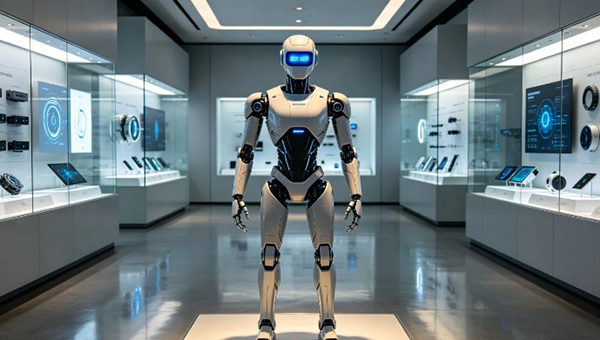
Many people view robotics as a distant concept, but the capital market clearly sees things differently.
Large models endow robots with a "brain," while robotics provides AI with a "body." As AI transitions from the screen to the real world, a brand-new industrial cycle is beginning.
Market research firms project that the global humanoid robot market will exceed $15 billion by 2030, maintaining a rapid growth rate of nearly 40% over the coming years.
Even more noteworthy is the unprecedented speed at which global capital is pouring into this sector.
In just the last few weeks, the German robotics company Neura Robotics secured up to $1.4 billion in funding, while Chinese companies like Xpeng and Unitree have accelerated their plans for mass-producing robots.
Some industry forecasts even predict that the global robotics market will surpass $50 billion in the coming years.
If the most valuable internet assets a decade ago were ".com" domain names, then in the next decade, one of the scarcest resources in the robotics industry will likely be top-tier brand assets associated with robots.
Looking back at the history of the internet, every industrial revolution has given rise to a host of "super" domain names.
The e-commerce era spawned a multitude of premium domain names related to shopping and payments; the blockchain era gave rise to keyword assets such as "Crypto," "Wallet," and "Token"; and
as robotics emerges as the new focal point of the global tech industry, "Robot" is undoubtedly one of the most core, direct, and globally recognized keywords in this sector.
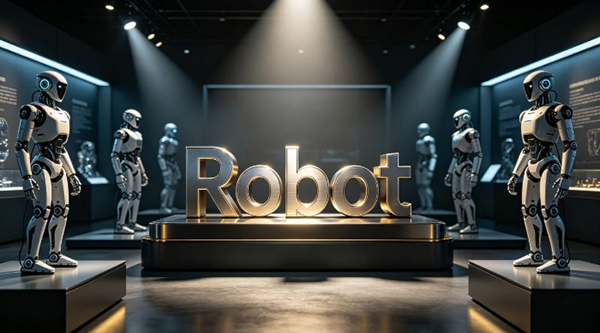
"Robot" is not merely a term for a specific sector; it is the universal designation for the entire robotics industry.
Whether referring to industrial robots, humanoids, service robots, or AI-driven robots, the term "Robot" remains central to them all. It represents far more than a single product; it serves as the gateway to a future industry valued in the hundreds of trillions of dollars.
More importantly, AI is redefining the very concept of the "Robot."
In the past, "Robot" signified mechanical automation; today, it represents the ultimate vehicle for the convergence of AI and the physical world; in the future, the robot may well become the most important smart device—surpassing even the smartphone.
As an increasing number of startups adopt ".ai" as their brand gateway, and as more robotics companies position AI as their core competitive advantage, "Robot.ai" naturally possesses immense industry relevance and vast potential for brand imagination.
Capital is setting its sights on robotics.
Entrepreneurs are positioning themselves within the robotics landscape.
Tech giants are vying for dominance in the field.
From the perspective of brand equity, the scarcity of a top-level domain that directly represents an entire industry will only intensify as that industry grows.
When the robotics industry eventually matures into the next "super-market," people may realize that the assets secured earliest—beyond just technology, talent, and market share—included the names that embody the industry as a whole.
"Robot.ai" is precisely such a name.


 Contact Us