


contact@dn.com
+86 135-7488-8887
3814848

Please scan the code using WeChat
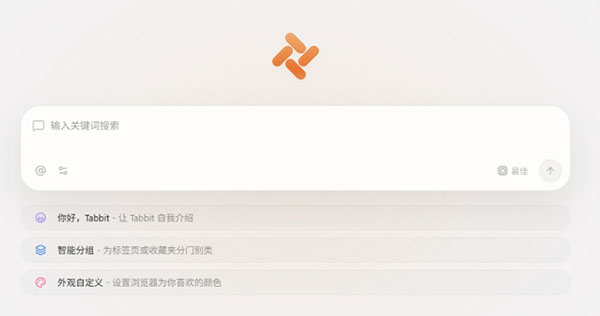
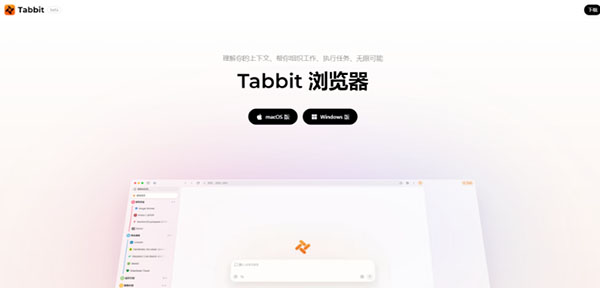
Meituan's subsidiary, Lightyear Beyond, has launched its AI-native browser, Tabbit, into public beta testing, becoming another heavyweight player after Microsoft Edge, Baidu Browser, and Quark, making the competition in the AI browser field increasingly fierce.
AI browsers are emerging in droves, completely breaking down traditional boundaries and integrating web browsing, full-network search, AI dialogue, and complex task execution. Many people focus on the AI functions, but overlook a deeper signal: the increasing number of browsers is a real boon for domain names.
As the core access point for domain names, the more diverse the access points and the higher the frequency of user use, the wider the value boundary of the domain name and the greater its commercial potential.
On the surface, new browsers are just another tool for accessing the internet; in essence, they are reshaping the entire internet access ecosystem. The more diverse the access points and the higher the frequency of user use, the wider the value boundary of the domain name and the greater its commercial potential.
From a fundamental perspective, domain names and browsers have a symbiotic relationship. Browsers are the "digital channel" for domain names to reach users; all access, redirection, and display of domain names rely on browsers. The more intense the competition among browsers, the healthier the web ecosystem, and the stronger the demand for domain names.
In the late 1990s and early 2000s, Internet Explorer (IE) dominated the market, holding over 90% market share at one point. The result? Web development was tied to Microsoft standards, leading to poor compatibility, slow loading times, and stagnant innovation. While domain names existed, very few were truly valuable.
In 2008, Chrome emerged, with Google directly challenging IE with its speed, security, and extensive extension ecosystem, quickly carving out a niche in the market. This browser war directly propelled the adoption of HTML5, CSS3, and responsive design, leading to the proliferation of e-commerce, social media, and video websites. A domain name registration frenzy ensued: the price of short .com domains soared from a few hundred yuan to tens of thousands of dollars, with premium Chinese pinyin domains being snapped up by businesses.
China's domain name registrations have surged from less than 10 million in 2010 to over 30 million today. This demonstrates that the more intense the browser competition, the healthier the web ecosystem, and the stronger the demand for domain names.
Currently, Chrome holds over 56% of the Chinese desktop market share, but Edge, Safari, UC Browser, and QQ Browser have formed a siege-like structure. The escalating competition in the browser arena is essentially a battle for traffic entry points, and the ultimate destination of this traffic depends on domain names.
Major companies are investing heavily in AI browsers to capture user attention. To achieve better display effects and more efficient traffic conversion among numerous browsers, companies will inevitably place greater emphasis on securing high-quality domain names. A domain name that aligns with their business, is easy to remember and search, can significantly reduce users' memory and access costs, making them a "traffic winner" in the browser ecosystem.
Meituan's entry into the AI browser market is not an isolated case. Baidu, Tencent, and ByteDance have already made their moves. Under the AI wave, browsers are evolving from "tools" to "productivity platforms." Each additional browser adds another "highway" to the internet, and domain names are the "golden plots" that these "highways" inevitably pass through.
The more browsers there are, the more choices users have, the more prosperous the web ecosystem becomes, and the higher the value of domain names. This is not a simple addition, but a positive cycle in the internet infrastructure. Tabbit's public beta is just the beginning of a new cycle. Embrace the era of multiple browsers; the domain name you own might double in value tomorrow.


 Contact Us