







contact@dn.com
+86 135-7488-8887
3814848

Please scan the code using WeChat
CES 2026 (International Consumer Electronics Show) is about to kick off – this industry extravaganza, dubbed the "Spring Festival Gala of Technology," will place AI at the absolute center this year.
From the edge computing power race among chip giants to the explosive growth of "embodied intelligence" in robots, home appliances, and AI hardware, AI is no longer an abstract concept, but rather the underlying logic that permeates the physical world.

I. Chip Computing Power Upgrade: The "Underlying Engine" for AI Implementation
The core of physical AI lies in computing power. At this year's CES, chip giants showcased their edge AI trump cards:
AMD released the Ryzen AI 400 series processors, with an enhanced NPU adapted for edge AI tasks in thin and light laptops, smoothly running functions such as real-time translation and local modeling;
Intel's Core Ultra 300 series uses advanced manufacturing processes, boosting AI computing power to 180 TOPS, providing "supercomputing-level" local support for AI PCs and smart terminals;
NVIDIA deepened its "Physical AI" strategy, driving computing power from data centers to physical scenarios such as robotics and industrial automation, making the breakthrough in computing power a reality for "every device with an AI brain."
II. Robots' Practical Application: From Showroom to Life Assistant
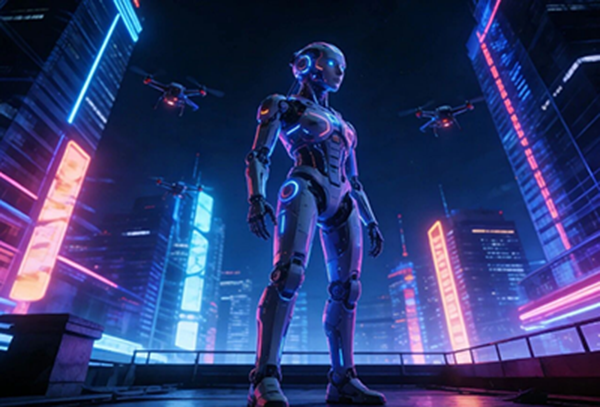
Humanoid robots and service robots are reaching a turning point in practical application, with a significant improvement in AI's embodied capabilities: Chinese companies are collectively making strides, with Logic and Unitree showcasing multi-scenario humanoid robots, and Dreame launching a "stair-climbing robot" with a robotic arm, covering needs such as home cleaning and industrial assistance;
Overseas giants are focusing on commercialization, with Boston Dynamics' all-electric Atlas completing industrial-grade assembly tasks, and Hyundai's robots achieving human-machine collaborative operations.
III. AI-Powered Smart Home Appliances: From Passive Response to Proactive Service
The home appliance industry is being restructured by AI, upgrading from "connected tools" to "life assistants":
Samsung, LG, and other brands have launched AI refrigerators with built-in large models and visual recognition, capable of managing ingredients, recommending recipes, and linking with other home appliances;
Dree showcased its whole-house smart ecosystem, with products such as AI air conditioners and sparkling water refrigerators using AI to predict needs, enabling user interaction and ecosystem linkage among AI home appliances.
IV. Personal AI Hardware: AI at Your Fingertips
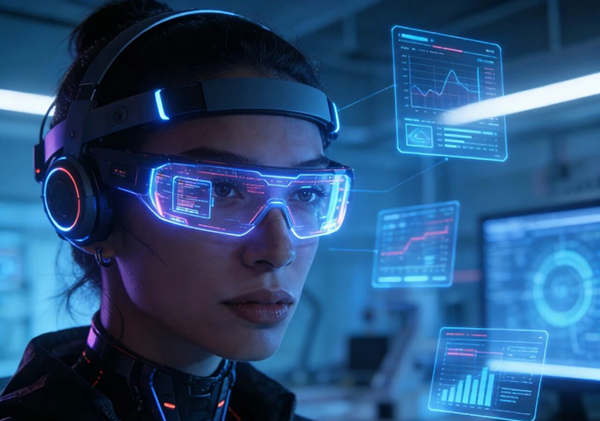
AI is moving from the cloud to become a "personal companion," with new types of personal hardware emerging one after another. Lenovo has launched lightweight AI smart glasses that support real-time translation, image recognition, and a personal AI hub that runs a model with hundreds of billions of parameters locally.
Lenovo's Personal AI Hub (Kubbit Project): A localized "edge cloud" device with dual built-in workstations, capable of running a large model with hundreds of billions of parameters locally. It can complete tasks such as document generation, data analysis, and creative design without uploading private data, becoming a personal "AI brain."
BOS Semiconductor's "AI Box" enables traditional cars to be upgraded to smart cockpits with a simple plug-and-play solution, while AI health watches enable health monitoring and remote consultations.
V. Display Technology + AI: Dual Upgrades in Vision and Intelligence
Display products incorporate AI optimization, balancing ultimate experience with intelligent interaction:
Samsung Micro RGB TV: Optimizes picture color and contrast in real time through AI algorithms, automatically adjusting parameters based on the content being played, delivering lifelike picture quality for movies, games, and live streams;
Hisense Tri-color Laser Projector: Boasting a brightness of up to 6000 lumens, combined with AI anti-glare screen technology, it delivers clear images even in daylight. AI also automatically corrects the projection angle and eliminates keystone distortion, eliminating the need for manual adjustments;
TCL HDR10 AR Glasses: With built-in AI visual recognition, it automatically adjusts brightness according to ambient light and achieves virtual-real fusion display, providing an immersive experience for watching movies, working, and navigating.
The explosion of AI products at this year's CES confirms the inevitable trend of "AI physicalization." As AI fully integrates into life, work, and industry, a .ai domain name that aligns with the industry has become a "must-have" for companies positioning themselves in the market.
It's not only a digital entry point for AI products, but also the "first credential" for users to identify brands and build trust. From robots and smart home appliances to personal AI hardware, .ai domains can accurately match scenarios, reducing brand education costs.
Jack, founder and CEO of DN.com, will also be present at CES 2026 to participate in in-depth industry exchanges and connect global clients with core opportunities for AI domains and their practical applications.


 Contact Us